
Kawai Kanjirō: House to House
Kawai Kanjirō: House to House
March 10–May 10, 2026
I have lived the past
The infinite past
I see the future
The infinite future
—Kawai Kanjirō
Japan Society Gallery presents Kawai Kanjirō: House to House, a solo exhibition celebrating the remarkable life and career of folk potter, poet, and artist Kawai Kanjirō (1890–1966) for the first time in the United States. Kawai is best known for his influential role in the mingei (folk art) movement in Japan, which he founded in the mid-1920s with his friends, the philosopher Yanagi Sōetsu (1889–1961) and the potter Hamada Shōji (1894–1978). Showcasing representative works from Kawai’s personal collection that are rarely seen outside his former home (now a museum known as the Kawai Kanjirō House), the exhibition traces the evolution from the artist’s early functional ceramic ware to his late-career modernist wood sculptures. From the Kawai Kanjirō House in Kyoto to Japan House in NYC, House to House explores Kawai’s profound impact on modern art in Japan and beyond.

Kawai Kanjirō (1890–1966)
Kawai Kanjirō was a Japanese folk potter, sculptor, artist, poet, and author best known for his influential role in the mingei movement in Japan.
Kawai graduated from the Tokyo Higher Polytechnical School in 1914 before working briefly at the Kyoto Municipal Ceramic Test Center. He became an independent potter in 1920. In 1926, Kawai and fellow potter Hamada Shōji (1894–1978) joined the philosopher and art critic Yanagi Sōetsu (1889–1961) to establish the mingei(folk art) movement. Kawai began creating folk pottery for everyday use and traveled throughout Japan, to Korea, and to China to investigate local folk art practices. During World War II, Kawai wrote extensively, later publishing his texts with illustrations by the printmaker Munakata Shikō (1903–1975).
After the war, Kawai launched a prolific wood carving practice, creating dynamic sculptures and stylized masks inspired by contemporaneous artistic, mechanical, and scientific imagery. He continued to produce ceramics, experimenting with sculptural forms, new glazes, and decorative techniques. He also designed household wares, published articles, and brushed calligraphy imbued with his philosophies. Yet his mingei beliefs persisted: in 1956, the Japanese government extended him the official honor of Living National Treasure for his achievements in ceramics, but he refused, preferring to work as an anonymous craftsman. Kawai passed away in 1966, leaving behind a rich legacy in multiple fields of modern art. His former residence opened as a museum, known as the Kawai Kanjirō House, in 1973.
Admission Information
Tuesdays–Fridays: 11 am–5 pm
Saturdays & Sundays: noon-6 pm
Free First Fridays, 5–7 pm*
Closed on major holidays
Tickets
$15 nonmembers
$10 students and seniors
Admission is always free for members, patrons with disabilities and an accompanying Personal Care Assistant.
*March 13th, April 3rd, May 1st, 2026
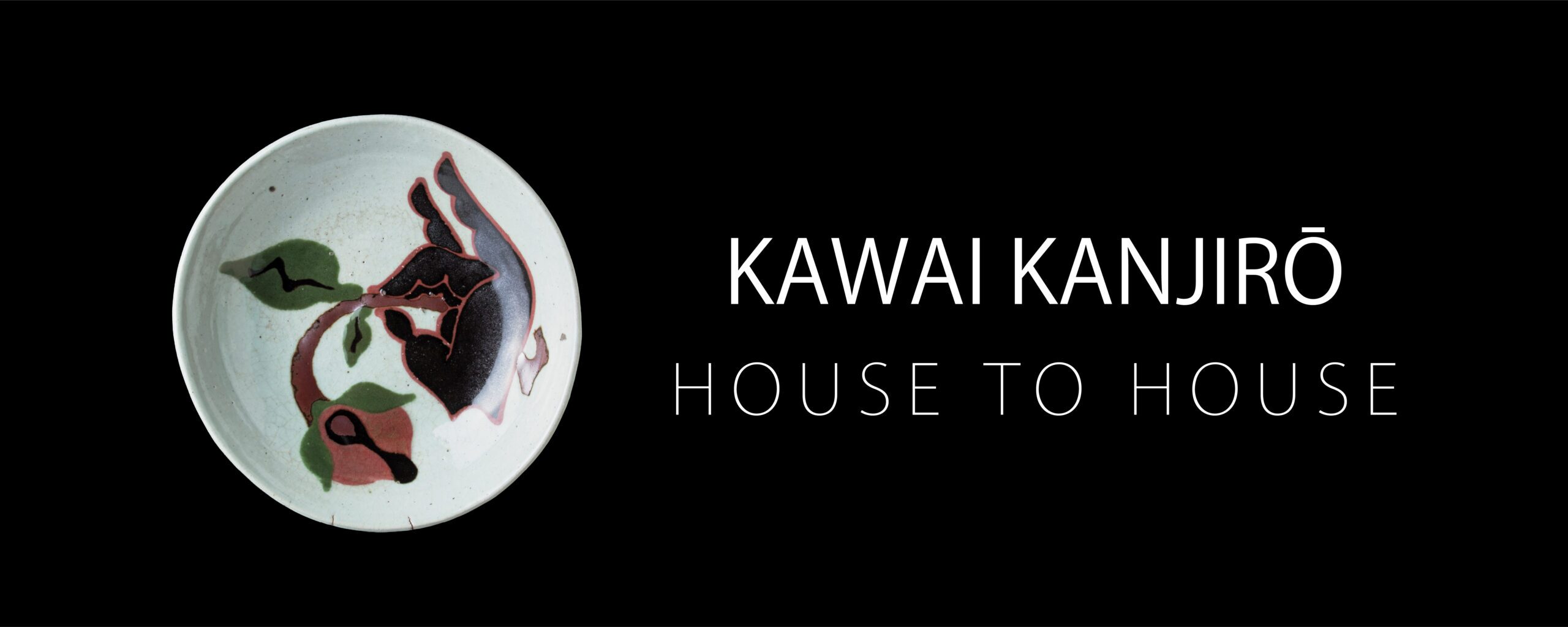
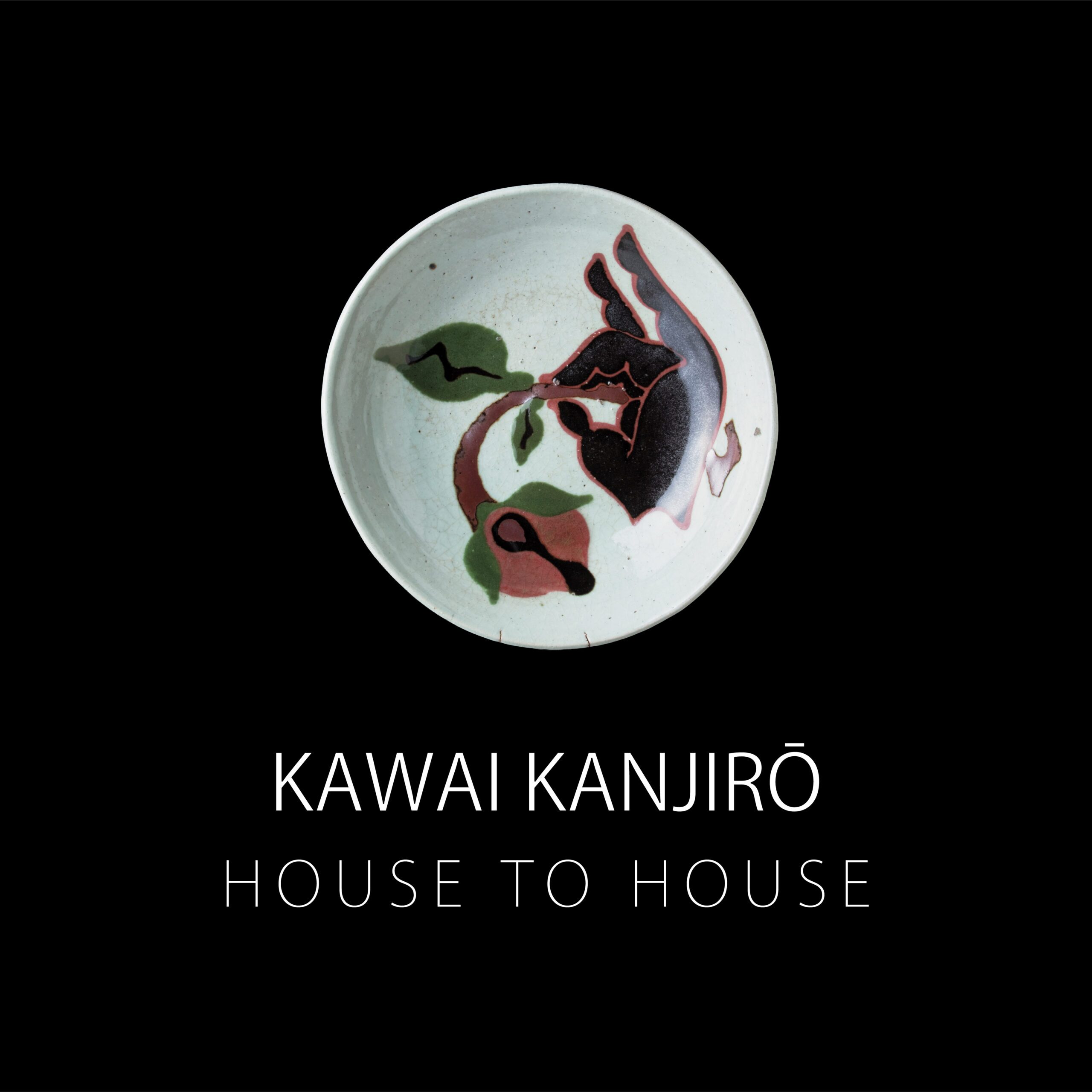
Banner: Kawai Kanjirō, Dish with motif of hand and flower on white ground, 1951. Collection of Kawai Kanjirō House. Photo courtesy of Kawai Kanjirō House
Portrait: Kawai Kanjirō. Photo courtesy of Kawai Kanjirō House
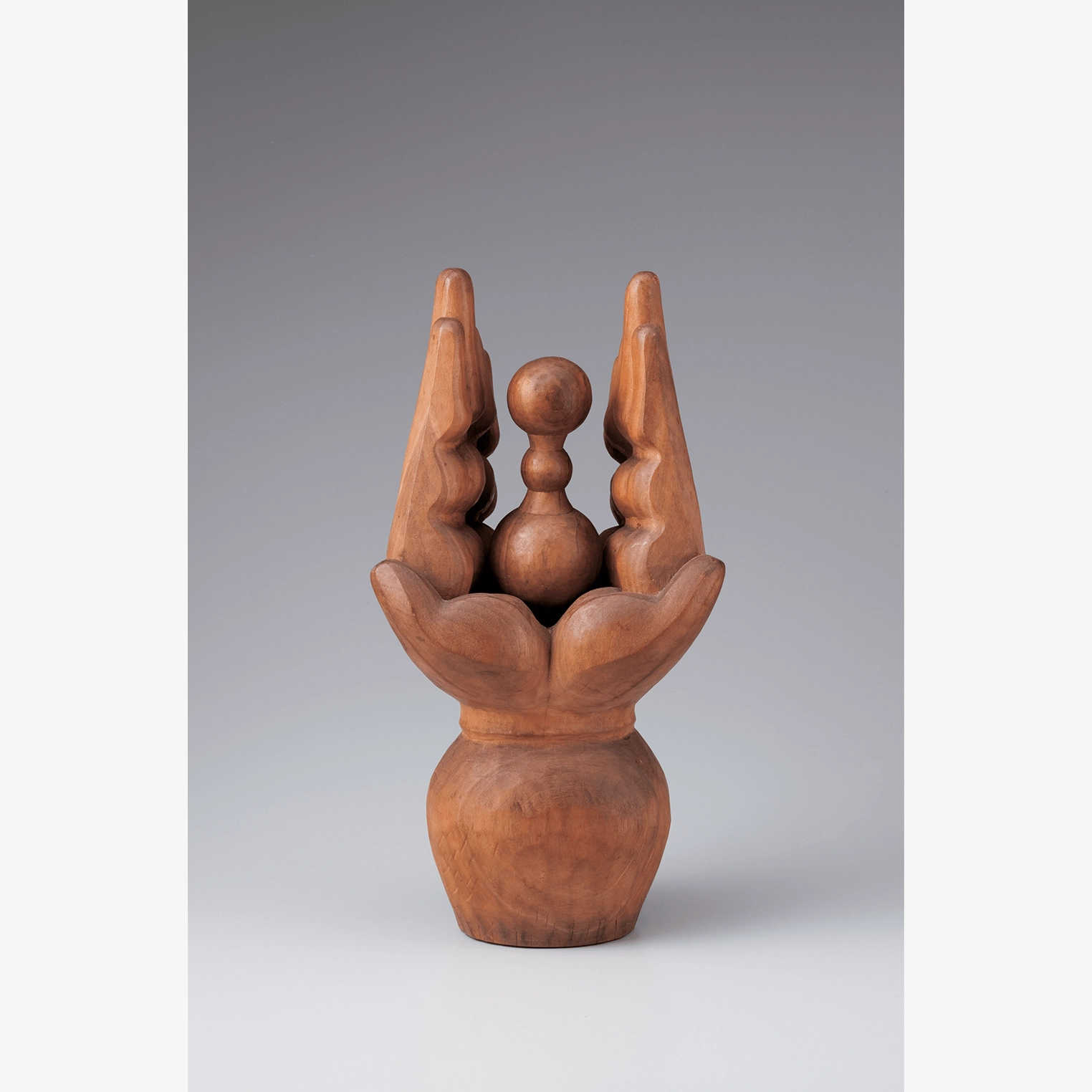
Inset Image: Kawai Kanjirō, Wooden sculpture, 1955. Collection of Kawai Kanjirō House. Photo courtesy of Kawai Kanjirō House
Kawai Kanjirō: House to House is supported, in part, by the E. Rhodes and Leona B. Carpenter Foundation, Joan B. Mirviss, and by Erik and Cornelia Thomsen.
Exhibitions and Arts & Culture Lecture Programs at Japan Society are made possible, in part, by Sompo Holdings, Inc.; the Lila Wallace-Reader’s Digest Endowment Fund; the Mary Griggs Burke Endowment Fund established by the Mary Livingston Griggs and Mary Griggs Burke Foundation; The Masako Mera and Koichi Mera, PhD Fund for Education and the Arts; Barbara Bertozzi Castelli; Peggy Danziger; Marc Mailhot; Jun Makihara and Megumi Oka; Thierry Porté and Yasko Tashiro; Japan Society Gallery Council; and other Gallery supporters. Support for Arts & Culture Lecture Programs is provided, in part, by the Sandy Heck Lecture Fund.

Transportation assistance is provided by Japan Airlines, the official Japanese airline sponsor for Japan Society Gallery exhibitions.

Japan Society arts and culture programs are supported by the New York State Council on the Arts with the support of the Office of the Governor and the New York State Legislature; in part, by public funds from the New York City Department of Cultural Affairs in partnership with the City Council.

Additional support is provided by a grant from The Venable Foundation.
Japan Society’s 120th anniversary initiatives and related programs are generously supported by Champion Sponsor, MUFG Bank, Ltd.; Advocate Sponsor, Mizuho Americas, Sumitomo Mitsui Banking Corporation; and Friend Sponsor, Mitsubishi Corporation (Americas).